

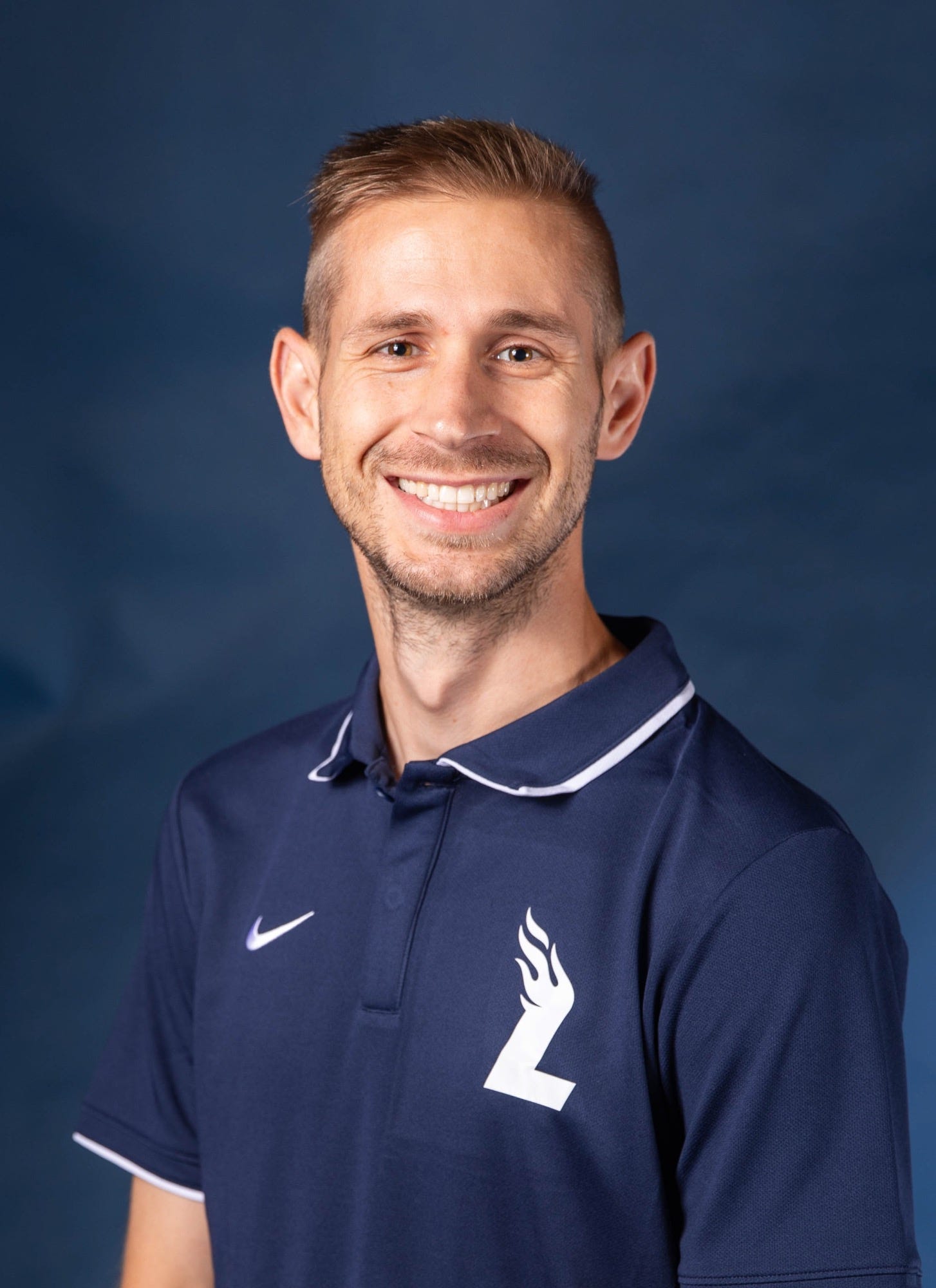
CLEVELAND, TN —- Late last October, Cleveland United announced the appointment of Adam Christensen as the first Head Coach in club history. It represented a key milestone in the history of the new club, due to kick-off in UPSL Georgia Division One this Spring. As co-founder Albert Murza explained last year, brining Christensen on board meant that “every meeting isn’t just about logistics anymore—it’s about vision”. And vision may indeed be the most important attribute for a Head Coach looking to build a first roster in club history.
I sat down with Coach Christensen in Cleveland over the MLK Day weekend to chat about his journey in the game, his approach to his new job, and his vision for Cleveland United on the field.
Adam, thanks so much for chatting with us and congratulations on the new role. Can you tell us about how the position with CUFC came about?
Yeah, I saw a link on Indeed saying they were looking for a coach. I love coaching in college, but I also enjoy being a head coach—running a sustainable program. I was looking for a Head Coach role I could do in addition to assistant coaching at the college level [with Lee University in Cleveland]. I had never been involved in the club game, except with club teams at the University of Florida and time with Brooke House FC in USL U20 and an assistant in USL W. That was fun—I enjoyed it.
I was also thinking about getting into USL and UPSL and increasing my coaching levels. I saw the ad pop up, applied, and hoped they’d respond. I sat down with Albert [Murza, co-Founder], we were supposed to talk for 20 minutes, but it turned into 2 hours. After that, I met all the owners for a second meeting. They shared their vision—they are "community first" so they knew what the community wants. We discussed how to build that from a soccer perspective, particularly recruiting and assembling a roster. They offered me the job after that conversation.
Can you tell us about your personal journey in soccer?
Well, I was a four‑sport athlete, playing a different sport every season. As a soccer player, I played anywhere up top—wherever they needed someone fast. Mostly striker or winger. When I got to college, I went to Lee my freshman year and ran track and cross country—two very different sports. Then I transferred to Trevecca Nazarene in Nashville, where I played soccer and ran track. I ended up in Hampden-Sydney in Virginia my last two years, playing soccer.
I moved to Florida where I started my first company. I figured I needed a life, to not be in the office all day and night—I did two different things, I got a puppy, and started coaching. At the University of Florida, I coached the club teams—men’s assistant my first year, women’s head coach my second. I moved into high school coaching, won a state championship with a Florida program, went 16‑0 in my first season. Eventually I became a college assistant, still coaching high school in the winters.
I progressed from there—Head Coach at the DII level in West Virginia on the women’s side, assistant for both men and women. I’ve coached in Conference Carolinas, at Trine University in Indiana (where we had the best season in school history—a conference championship), and in the Gulf South with Lee.
We moved here to Cleveland in October 2024. My wife works at Lee, so I connected with the soccer coach there and took on the Assistant Coach role. I went to Lee for one year running track and cross country, so I had some connections already. I’d always wanted to play for them, so to coach them and be a part of the program, its awesome.
Was there a particular part of your journey that really shaped you approach to soccer?
The high school I went to was very competitive with high expectations. I didn’t play until my senior year. In college I had seven head coaches in six semesters because of transfers and multiple sports. So I’ve seen the good, bad, ugly, and everything in between.
My Lee track coach was great. In soccer, Ian McMichael at Hampden‑Sydney—eventually at Barton—was the first person who gave me a break in college coaching. He didn’t play me much, ironically. I didn’t always agree with him, but he was a great mentor.
I learned what to do—and what not to do—as a coach from a lot of the coaches I’ve had. I learned that you’re not supposed to be the players’ friend, but they need to trust and respect you. The goal is to make players better every single day—not just yell at them. My philosophy: it’s nice if people like each other, but they *must* trust each other.
Do you plan to stay on as Lee’s assistant while being Head Coach at CUFC?
Yes, I’ll still do it. We have guys from Lee who will be on the Cleveland United team. So it’s a good transition—finishing their college careers while still playing at a high level. Many players get lost in the gap between college and the pros. The more bridges you create, the better. With players from nearby Lee, Bryant, Tennessee Wesleyan, and others, you get guys in the prime of their careers in one place.
So, how have the first few months been?
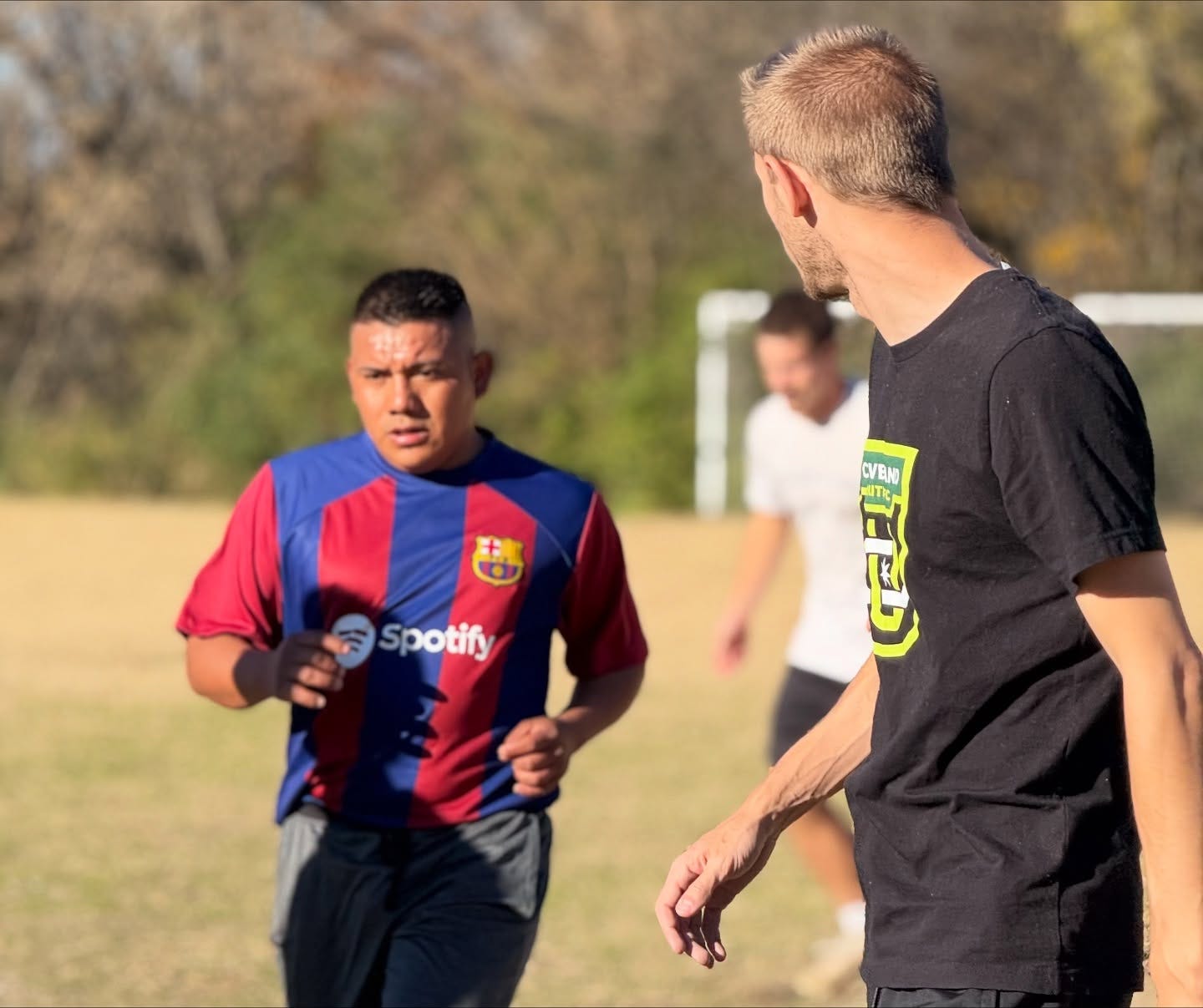
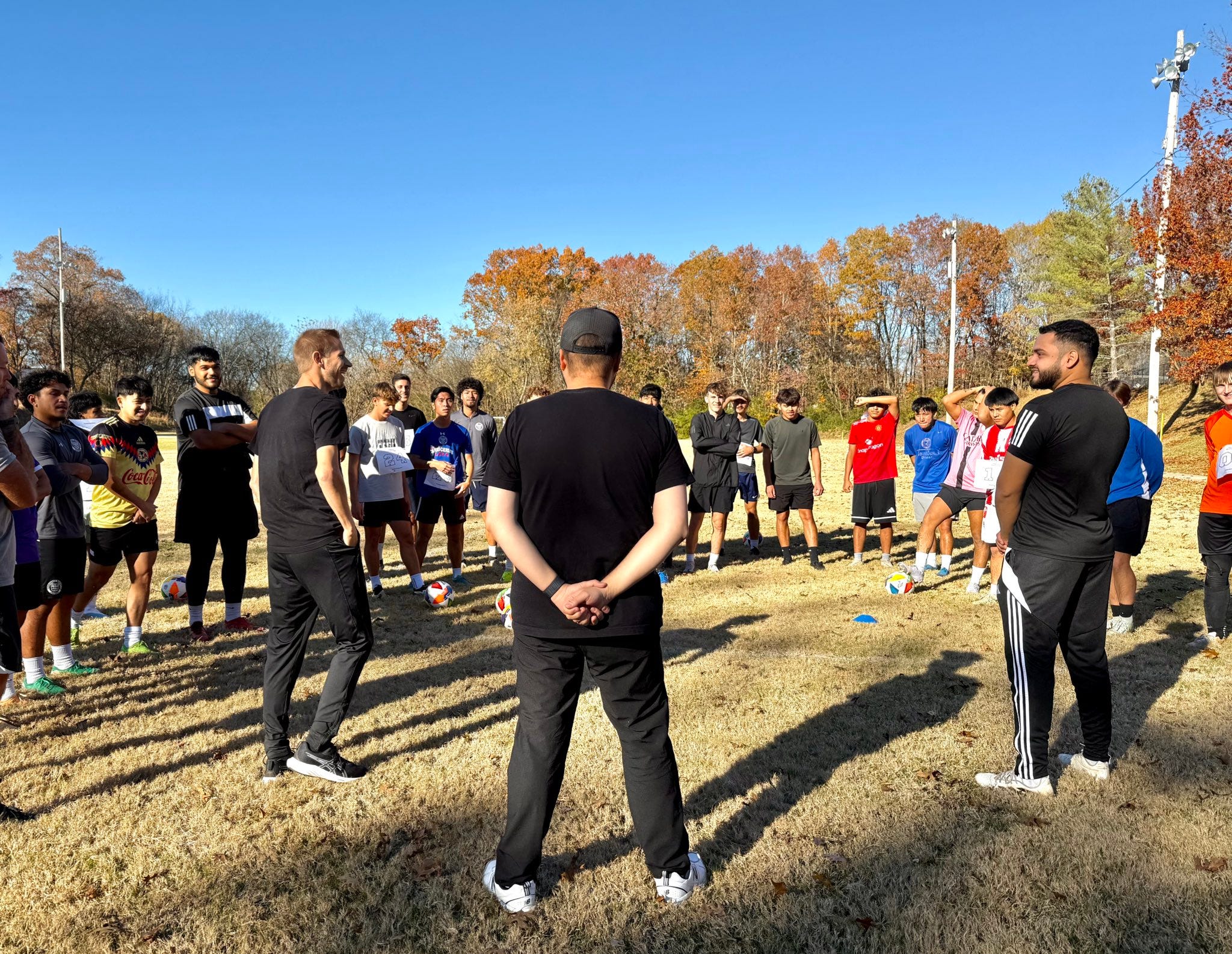
It’s gone well. We’ve had two tryout dates so far, about 30 guys at each one. I’m very happy with the turnout—lots of guys want a place to play in a professional environment. No matter the level, you want to create that environment. Every day, players and staff should get a little better.
Most of the guys are local, with a few from Lee and Tennessee Wesleyan, and many from Chattanooga. They have big clubs there, so it’s great they came out. We don’t have an academy yet, underlying clubs to hold things up. It’s unique. I’m happy with the quality—we’ll have a decent squad. Playing in UPSL Division 1 initially is good as it gives us a clear baseline and hopefully a path to the Premier Division.
We hope to start training in about a week and a half.
I’d read that in your time at Trine University, you specialized in player acquisition and ID. How does that experience help now?
Recruiting—college or semi‑pro—is about knowing the type of player your program attracts. Colleges often cast the widest net possible, but the best models develop a niche and target players who fit it.
You need a bedrock type of player and student. Don’t waste time on people who don’t fit your identity. That’s something I learned.
Do you have a preferred playing style? Or will it depend on available players?
I do have a preferred style. Coaches always do. If its simple that’s one thing, if it’s complicated, it takes a long time to teach. Over the last few years, I’ve developed a system that has evolved.
I like giving players freedom in the attacking third. I love the ideas of total football. Not in the sense of players running around wherever they want, but in using triangles and diamonds so players can move the ball more freely and be more creative, instead of rigid box‑shaped play that doesn’t fit with natural body movement. Box angles are 90 degrees which are hard to automatically play from. Triangles offer 120 degree movement and play.
In possession, I prefer three at the back, a single pivot, and wingers providing depth—more of a 3‑4‑3. In defense, it transitions into a 4‑4‑2 or 4‑2‑3‑1. We’ll look different in and out of possession. I want us to bait presses, create artificial transitions, attack quickly, and get in behind.
Unlike some other UPSL sides that more like Academy outlets, Cleveland United is a community club that is targeting fan presence. Fans expect to be entertained. Does that influence your style?
Soccer is supposed to be a game. Soccer is supposed to be fun. So why would we play scared? I don’t want a mentality of fear. We’ll chase the game—whether it’s the best or worst team in the conference. We’ll impose our identity.
If it’s not beautiful or fun, why would anyone watch? A community‑based team should be entertaining. Drama matters. There’s a quote I like [from Gian Piero Gasperini]; “if you win without danger, there's no glory to your triumph”.
I’d rather high‑press—and if the opponent beats us with skill, fine, they were the better team. But we won’t sit back.
Thoughts on the UPSL Division One you’ll be playing in?
We went to some games in the fall to see the competition level. The level is strong, but from what I’ve seen, I believe we can put a competitive team on the field. There’s no “team to beat”—just a goal to get the most points and push for first place.
We prepare for each opponent with a clean slate—what do they do well, what are their weaknesses? I’m excited. I think we’ll surprise people in our first year.
Do you have a message for the community in Cleveland? Why should they come support this team this Spring?
This is a team *from* the community, *of* the community, and *for* the community. You should be proud of the people you live with and the community you build. College towns let you choose your people—football clubs extend that.
Its like how football started in England—local players and communities. We’ll have players from all over, but the foundation is local talent. You’ve got to be proud of your community.
My thanks to Coach Christensen and to Cleveland United FC for taking the time to speak with the Southeast Soccer Report. You can follow the club’s journey by visiting their website or following them on Facebook, TikTok, Instagram, LinkedIn, and X.